

When the World Shakes: Why Diversification Matters More Than Ever
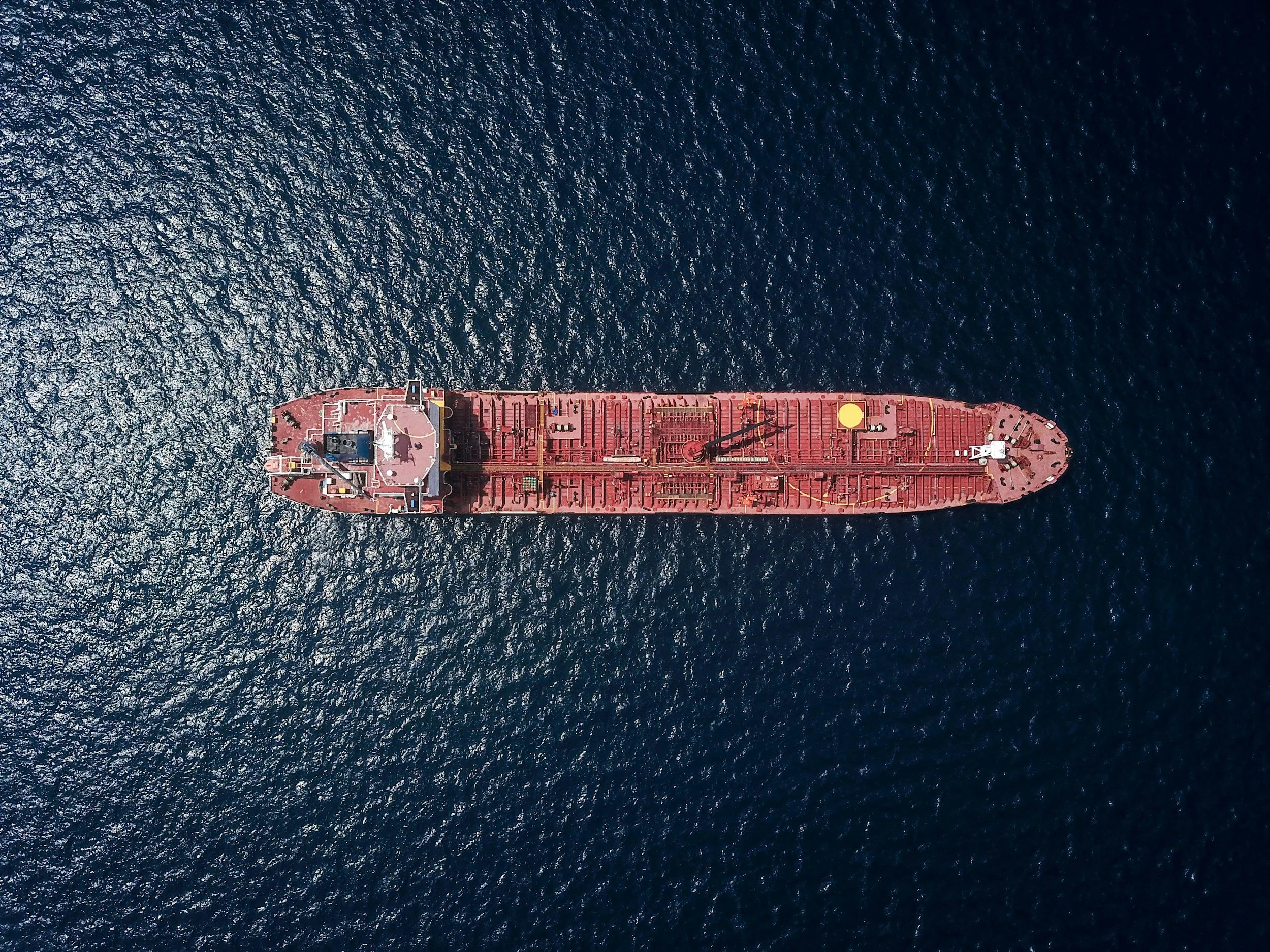
On 28 February 2026, the United States and Israel launched coordinated airstrikes on Iran. Within hours, the Strait of Hormuz - the narrow waterway through which roughly 20% of the world's daily oil supply flows - was effectively closed. Oil prices surged. Stock futures fell. LNG prices in Asia spiked by over 60%. Global markets, already navigating the turbulence of tariffs and sticky inflation, absorbed yet another severe shock.
This isn't a geopolitical commentary. It's a timely reminder of something we talk about with clients regularly: the single most powerful tool an investor has against the unpredictable is a well-diversified portfolio - built before the world goes sideways, not after.
The Strait of Hormuz and Your Investment Portfolio
At first glance, a naval chokepoint in the Persian Gulf might seem a world away from an Australian investor's portfolio - whether that's held inside superannuation, through a family trust, a self-managed fund, or simply as personal investments. But markets don't respect geography.
The International Energy Agency has described the current disruption as the "greatest global energy security challenge in history." Brent crude surged past $120 per barrel - levels not seen since 2008. LNG spot prices in Asia jumped more than 140% after Iranian strikes on Qatar's Ras Laffan complex damaged 17% of Qatar's production capacity. Inflation forecasts have been revised upward across developed economies. The European Central Bank has already postponed planned rate cuts. Economists are now flagging elevated risks of stagflation - the toxic combination of low growth and high inflation - in energy-intensive economies.
Energy prices don't just affect petrol at the bowser. They feed into transport costs, food production (through fertiliser), manufacturing, and corporate margins broadly. When energy spikes, the ripple effect reaches almost every sector of the economy - and therefore almost every investment portfolio.
The question isn't whether geopolitical shocks will happen. History tells us they will, repeatedly and unpredictably. The question is: how is your portfolio positioned when they do?
What David Swensen Taught Us About Uncertainty
The late David Swensen, who managed Yale University's endowment for over three decades and grew it from $1 billion to more than $40 billion, is widely regarded as one of the greatest institutional investors of the modern era. His philosophy was elegant in its simplicity and disciplined in its execution.
Swensen's central insight was that diversification across truly uncorrelated asset classes - not just owning many stocks - is what produces resilient long-term returns. In his landmark work Pioneering Portfolio Management, he argued that most individual investors are dramatically over-concentrated in a single asset class (typically domestic equities or residential property) while mistaking superficial variety for genuine diversification.
His model endowment allocated meaningfully to domestic equities, international equities, fixed income, real assets (including real estate and commodities), and alternative investments. The logic: when one asset class is stressed, others may hold steady or even benefit. True diversification, Swensen argued, isn't about minimising returns - it's about earning consistent returns across the full range of economic conditions.
This matters in 2026 more than it has for some years. Consider how different asset classes have responded to the Iran conflict:
Equities broadly fell on the news, with Asian markets - more exposed to Middle Eastern energy - declining more sharply than US markets.
Energy stocks and commodities surged, with oil majors and defence contractors posting significant gains.
Gold and other safe-haven assets attracted capital as investors sought stability.
Fixed income in certain markets benefited as central bank rate expectations were repriced.
Domestic Australian assets - insulated by geography and our own energy production - showed relative resilience compared to more exposed markets.
A portfolio holding only one or two of these wouldn't just have missed the gains - it would have been entirely at the mercy of the shock.
Diversification Is Not "Spreading Risk" - It's Owning Multiple Sources of Return
One of the most common misconceptions we encounter is that diversification means diluting returns by spreading money thinly across many things. Swensen was emphatic on this point: genuine diversification isn't about watering down a portfolio. It's about identifying multiple, genuinely different return streams that respond differently to economic conditions.
He distinguished between:
Asset allocation - the strategic mix of asset classes, which he called the most important decision an investor makes
Market timing - attempting to move in and out of markets in response to events, which he considered largely futile
Security selection - picking individual stocks or bonds, which adds complexity without reliably adding returns for most investors
The implication for today's environment is clear. Investors who attempted to "time" the Iran conflict - getting out of equities before the strikes, rotating into energy just in time - faced near-impossible odds. The strikes came during active peace negotiations, on a day when Oman's foreign minister had announced a "breakthrough." No one predicted the exact moment.
What a well-constructed, diversified portfolio did instead was absorb the shock. Energy and commodity holdings rose. Safe-haven assets provided ballast. International diversification meant the portfolio wasn't solely exposed to any one region's vulnerability.
This is what genuine asset allocation is designed to do - not to predict the next crisis, but to be ready for it.
The Australian Context: Relative Insulation, Real Exposure
Australian investors have some natural advantages in this environment. Australia is a significant energy exporter - particularly LNG - meaning an energy price shock of this magnitude can actually be positive for parts of the domestic economy and equity market. The Australian dollar, often sensitive to commodity prices, has a degree of natural hedge against energy-driven inflation.
However, this doesn't mean Australian investors are insulated. Australia is deeply integrated into global trade and capital markets. Australian investors hold wealth across a range of structures - superannuation, self-managed super funds, family trusts, investment bonds, and direct personal portfolios. Many of these, particularly superannuation, are deeply integrated into global markets by design, which is a strength over the long run but also means real exposure to the kinds of global dislocations we're currently experiencing.
Moreover, as a trading nation heavily reliant on Asian demand - and given that Asian economies are among the most severely affected by Middle Eastern energy disruptions - the indirect effects on Australian exports and growth are meaningful.
The lesson isn't to retreat into domestic assets. It's to ensure international diversification is genuinely balanced: capturing the upside of global growth while not being over-exposed to any single region's geopolitical risk.
The Enduring Principle: Build the Portfolio Before the Storm
Swensen was fond of pointing out that the investors who fare worst in crises are those who make their most important portfolio decisions in response to them. Panic selling into a falling market and chasing rising assets after they've already moved are the two most reliable ways to destroy long-term wealth.
The discipline he advocated - and that we apply at EGU - is to construct a portfolio with deliberate, considered asset allocation based on your goals, time horizon, and risk tolerance; and then to rebalance systematically back to that allocation when markets move, rather than reacting emotionally to headlines.
In practical terms, that means:
A meaningful allocation to real assets, including commodities and infrastructure, which can act as a natural inflation hedge when energy prices surge
International equity exposure that captures global growth without concentration in any one market
Fixed income holdings calibrated to your specific income needs and risk profile
Periodic rebalancing to ensure the portfolio doesn't drift into unintended concentrations as markets move
The Iran conflict is an acute reminder that the world is uncertain and always will be. The 1973 oil embargo, the 1979 Iranian Revolution, the Gulf War, September 11, the Global Financial Crisis, COVID-19 - each one looked unprecedented at the time. Each one rattled markets. And in every case, well-diversified investors with a long-term horizon recovered and went on to build wealth.
A Final Thought
We are watching the situation in the Middle East closely and considering its implications across all client portfolios. The current environment - elevated oil prices, inflationary pressure, and geopolitical uncertainty that shows no sign of rapid resolution - reinforces the importance of the investment principles we apply every day.
If you have questions about how your portfolio is positioned, or would simply like to talk through what the current environment means for your financial plan, please don't hesitate to reach out. That conversation is exactly what we're here for.
Warm regards,
___
Ben Wieland | EGU Wealth Management
Partner and Senior Wealth Manager
1300 102 542 | 0423 710 820
ben@egu.au | www.egu.au
GPO Box 1598 Brisbane QLD 4001
This information is general in nature and does not take into account your personal objectives, financial situation, or needs. Before acting on this advice, you should consider whether it is appropriate for your individual circumstances. If the advice involves acquiring a specific financial product, you should read and consider the relevant Product Disclosure Statement (PDS) before making any decision.
Sources
Britannica — 2026 Iran war: https://www.britannica.com/event/2026-Iran-war
Wikipedia — 2026 Iran war: https://en.wikipedia.org/wiki/2026_Iran_war
Wikipedia — Economic impact of the 2026 Iran war: https://en.wikipedia.org/wiki/Economic_impact_of_the_2026_Iran_war
Wikipedia — 2026 Iran war fuel crisis: https://en.wikipedia.org/wiki/2026_Iran_war_fuel_crisis
Al Jazeera — US and Iran fail to reach a deal after marathon talks in Pakistan (12 April 2026): https://www.aljazeera.com/news/2026/4/12/us-and-iran-fail-to-reach-peace-deal-after-marathon-talks-in-pakistan
Al Jazeera — Why the oil and gas price shock from the Iran war won't just fade away (23 March 2026): https://www.aljazeera.com/opinions/2026/3/23/why-the-oil-and-gas-price-shock-from-the-iran-war-wont-just-fade-away
Al Jazeera — How badly has the Iran war hit the global economy? (16 March 2026): https://www.aljazeera.com/news/2026/3/16/the-tell-tale-signs-how-bad-has-the-iran-war-hit-the-global-economy
World Economic Forum — The global price tag of war in the Middle East (March 2026): https://www.weforum.org/stories/2026/03/the-global-price-tag-of-war-in-the-middle-east/
TIME — As Peace Talks on Iran Approach, How Soon Could Prices Go Down? (April 2026): https://time.com/article/2026/04/09/oil-gas-commodity-prices-iran-war/
CNN Business — Oil surges and stock futures sink as war in Iran threatens crude supply (1 March 2026): https://www.cnn.com/2026/03/01/business/oil-prices-us-attack-iran-vis
Dallas Fed — The Impact of the 2026 Iran War on U.S. Inflation, Kilian, Plante, Richter & Zhou: https://www.dallasfed.org/~/media/documents/research/papers/2026/wp2609.pdf
David F. Swensen — Pioneering Portfolio Management: An Unconventional Approach to Institutional Investment (Free Press, 2000; revised 2009)